




Refrigeration Unit Explained
Cold room refrigeration units, as core equipment in modern industrial refrigeration, are widely used in cold storage, food processing, chemical, medical, and other fields. Understanding their composition and working principles is crucial for selecting, installing, and maintaining refrigeration units. This article will detail the main components and functions of a refrigeration unit.
I. Basic Components of a condensing Unit A refrigeration unit mainly consists of four core components: a compressor, a condenser, an evaporator (sometimes also called a fan), and an expansion valve. These are supplemented by components such as an oil separator, a liquid receiver, an oil sight glass, and a diaphragm-type manual valve return filter, forming a complete refrigeration system.
Refrigeration compressor: As the “heart” of the refrigeration system, the compressor is responsible for compressing low-temperature, low-pressure refrigerant gas into high-temperature, high-pressure gas, providing power for the refrigeration cycle.
Condenser : In the condenser, the high-temperature, high-pressure refrigerant gas is cooled and condensed into a high-pressure liquid through heat dissipation. The heat released in this process is usually carried away by cooling water or air.
Evaporator unit: High-pressure liquid refrigerant evaporates in the evaporator after being depressurized by a throttling device (such as an expansion valve), absorbing heat from the surrounding environment to achieve a cooling effect. The evaporator is a key component in the refrigeration unit for heat exchange with the outside world.
Expansion Valve: The expansion valve regulates the refrigerant flow into the evaporator, ensuring that the refrigerant can fully evaporate and absorb heat.
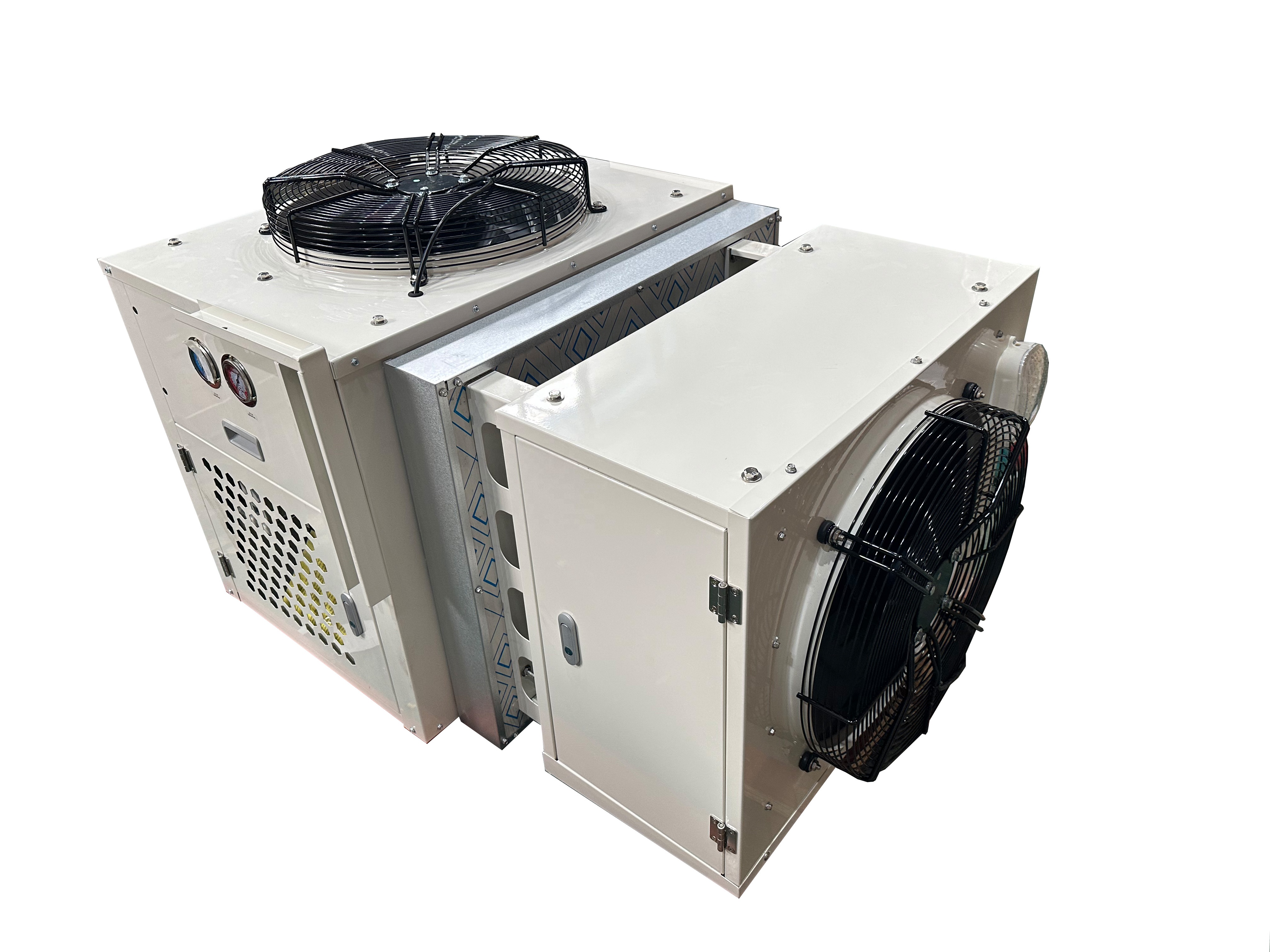
II. Types and Characteristics of Refrigeration Units
Refrigeration units can be classified into several types based on their shape, compressor type, and application scenario.
Classification by Shape and Compressor Type:
Side-Discharge Condensing Unit: The compressor and condenser are assembled together, typically used in small to medium-sized refrigeration systems.
Top-Discharge Unit: Suitable for large refrigeration systems, offering better heat dissipation.
III. Selection and Application of Refrigeration Units
When selecting a refrigeration unit, several factors must be considered, including the required cooling capacity, ambient temperature, condenser type, compressor selection, and special configurations required for quick-freezing or medium-to-large-sized cold storage facilities. Correct unit selection is crucial for ensuring refrigeration performance, reducing energy consumption, and extending equipment lifespan.
Simultaneously, the installation and maintenance of refrigeration units must adhere to professional standards. For example, during installation, it is essential to ensure that no foreign objects enter the heat exchanger to avoid blockage or poor heat exchange; during system operation, the refrigerant charge, compressor operating status, and condenser heat dissipation effect must be checked regularly to ensure stable system operation.
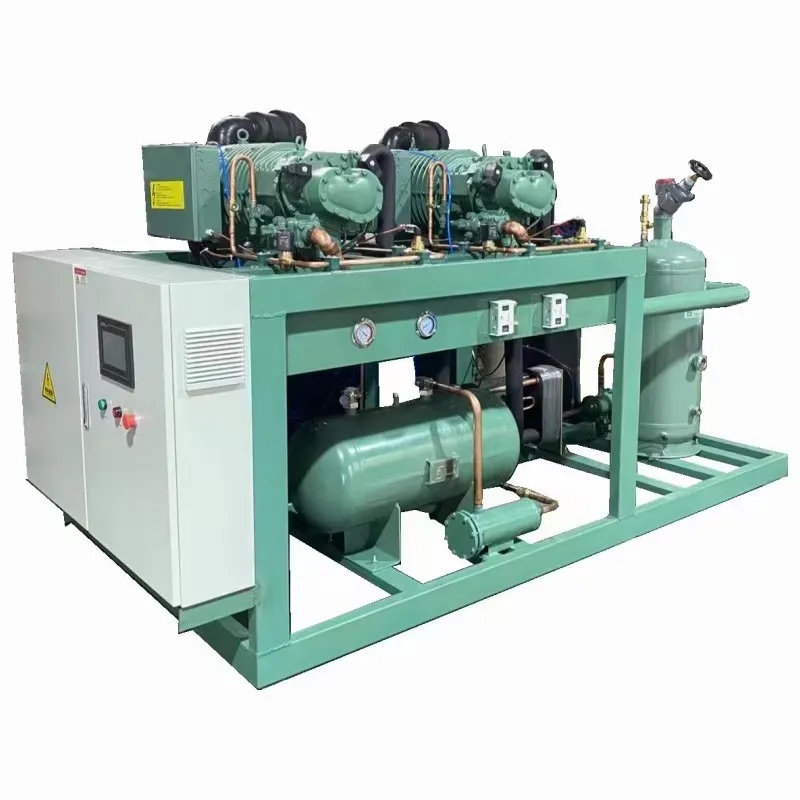
IV. Development Trends of Refrigeration Units
With the continuous development of refrigeration technology, refrigeration units are evolving towards higher efficiency, energy saving, and environmental friendliness. The research and application of new refrigerants, the introduction of intelligent control systems, and the adoption of high-efficiency energy-saving technologies will further enhance the performance and user experience of refrigeration units.
Classification by Unit Structure:
Fully Enclosed Integrated Unit: The four core components and electrical control equipment are assembled together, facilitating installation and suitable for small cold storage facilities.
Semi-Hermetic Unit: The compressor is partially enclosed, suitable for medium to large-sized refrigeration systems.
Parallel Piston/Screw Unit: Utilizes multiple compressors operating in parallel, improving cooling capacity and system stability.
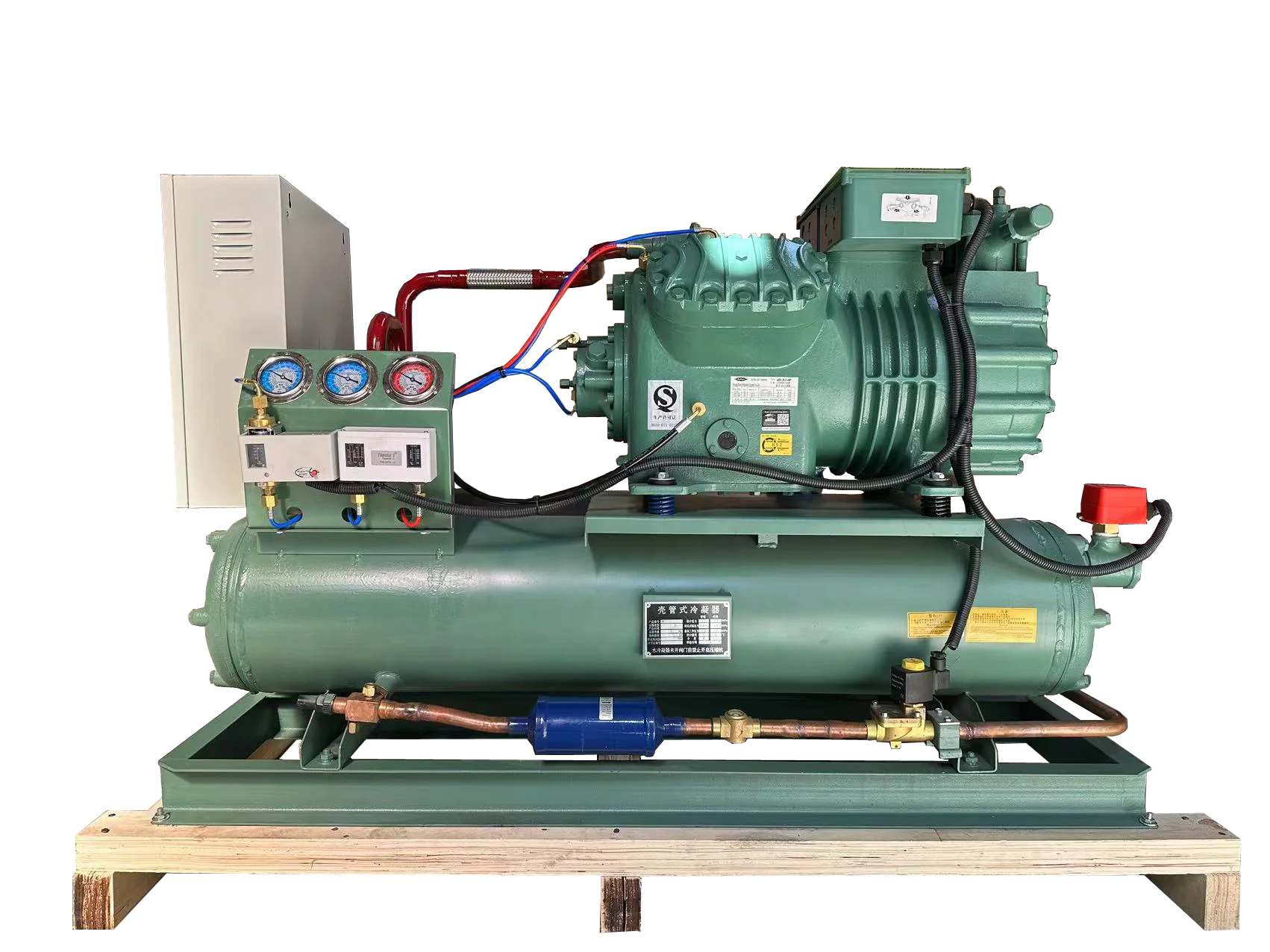
Water-cooled condensing units: Use water as the cooling medium, offering high heat dissipation efficiency and suitable for high-temperature and high-humidity environments.
Hot defrosting units: Specially designed for refrigeration systems requiring periodic defrosting, such as low-temperature cold storage room
Guangxi Cooler Refrigeration Equipment Co.,Ltd.
Tel/WhatsApp:+8613367611012
Email:karen@coolerfreezerunit.com
Post time: Jan-20-2026