




Energy consumption in cold storage operations typically accounts for over 70% of the total energy consumption of cold chain logistics companies, making energy conservation in cold storage particularly important for users.
Generally, in actual operation, refrigeration systems experience constantly changing temperature conditions. Only through careful operation and accurate adjustment of the refrigeration equipment by cold storage managers can the system maintain its optimal working state and achieve high efficiency and energy savings.
For example, when the compression ratio of the freezing room or blast cold room in a low-temperature cold storage is less than 8 after receiving goods, many low-temperature cold storage facilities immediately start with a two-stage compressor, increasing energy consumption. The correct approach is to first use single-stage refrigeration compression. Once the evaporation pressure decreases and the compression ratio exceeds 8, then switch to two-stage compression refrigeration. Experts in the air conditioning and refrigeration market told reporters that, in addition to this, other measures can also effectively reduce energy consumption.
I. Utilize Warehouses Rationally and Consolidate Storage During Off-Season
The electricity consumption of walk in freezers is calculated based on their cooling capacity, typically including two parts: first, the cooling capacity required for goods cooling and refrigeration; and second, the cooling capacity required for the cold storage room itself (i.e., the enclosure structure) and operational management. The key to saving electricity lies in the utilization rate of cold storage rooms. Cold storage rooms with low utilization rates consume more cooling capacity and therefore more electricity. In practice, the power of the motors is selected based on the refrigeration capacity of the machine, meaning the cooling capacity of the warehouse is less than the refrigeration capacity of the refrigeration unit. During the off-season, cold storage facilities operate with less stock, resulting in wasted energy. Therefore, during the off-season, goods from several cold storage rooms can be consolidated according to storage temperature to reduce energy consumption.
II. Regular Oil Draining, Descaling, and Air Bleeding
When there is a 0.1mm thick oil film inside the evaporator coil, the evaporation temperature will drop by 2.5℃ to maintain the set temperature, increasing power consumption by more than 10%. When the scale buildup on the water pipe walls in the condenser reaches 1.5mm, the condensation temperature will rise by 2.8℃, increasing power consumption by 9.7%. When non-condensable gases are present in the refrigeration system, and their partial pressure reaches 0.196MPa, power consumption will increase by approximately 18%. Therefore, it is crucial to regularly drain oil, descale, and bleed air from the cold storage refrigeration system.

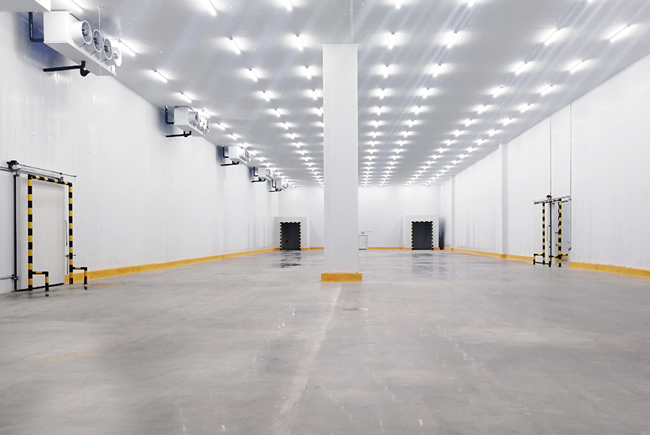
III. Properly Adjust the evaporator in freezer and Defrost Timely
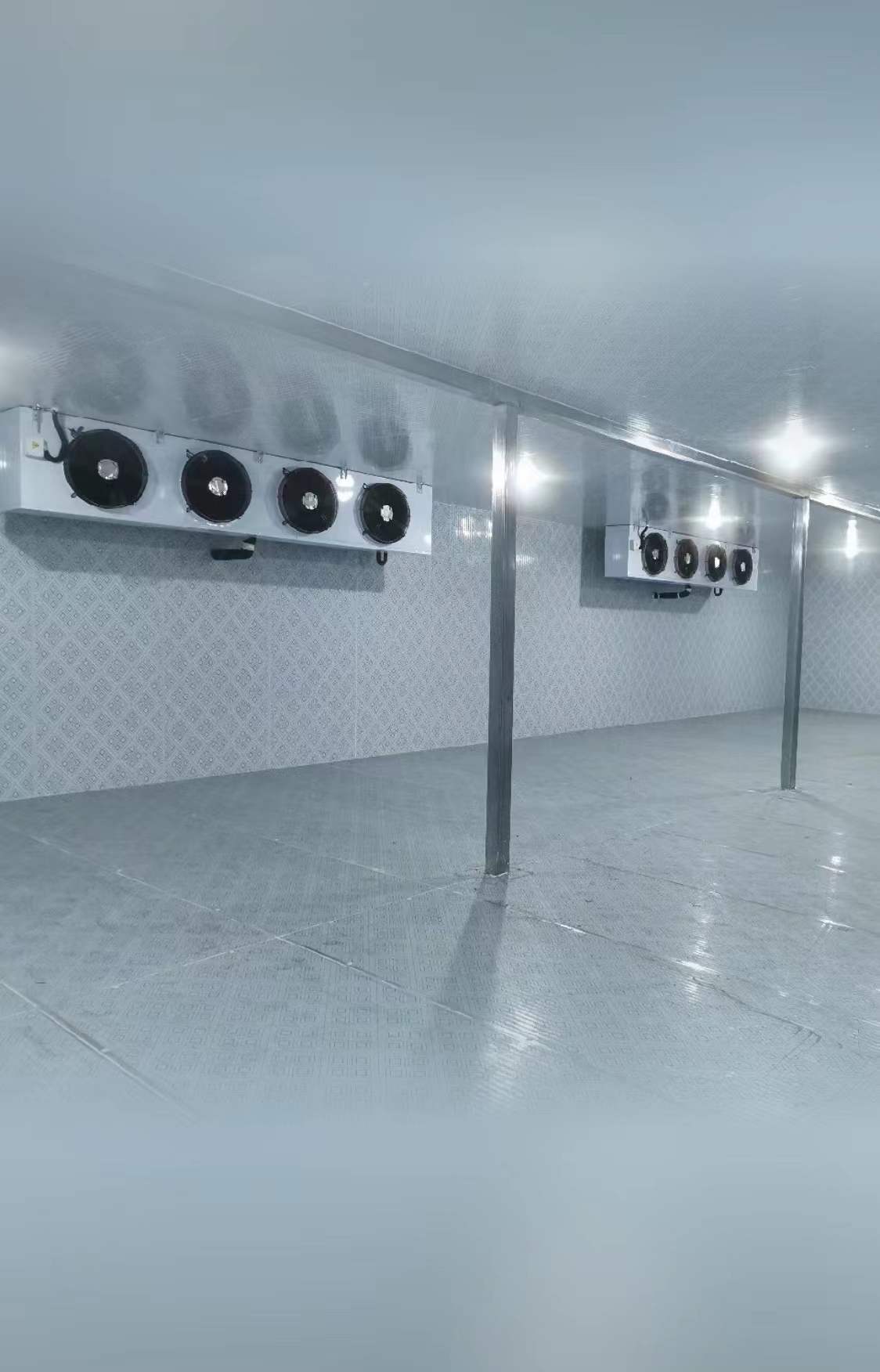
Generally speaking, for every 1°C increase in the evaporation temperature of a cold storage unit, energy savings of 2% to 2.5% can be achieved. Therefore, provided that the product’s refrigeration process is met, the evaporation temperature can be increased as much as possible by adjusting the liquid supply. The thermal resistance of frost is generally much greater than that of steel pipes. When the frost thickness exceeds 10mm, its heat transfer efficiency decreases by more than 30%. When the temperature difference between the inside and outside of the pipe wall is 10°C and the storage temperature is -18°C, after one month of operation, the heat transfer coefficient K value of the evaporator system is only about 70% of its original value. When the evaporator fan is severely frosted, not only does the thermal resistance increase, but the airflow resistance also increases. In severe cases, airflow may be impossible. Therefore, the surface of the evaporator should be defrosted in a timely manner. In the refrigeration systems of large and medium-sized cold storage facilities, hot ammonia (fluorine) defrosting and water defrosting are generally used instead of energy-intensive electric defrosting. However, in small Freon refrigeration systems, electric defrosting can be used to simplify the piping, but the appropriate electric heating power should be configured according to the heat required to melt the frost layer.
IV. Energy Conservation Considerations for Internal Lighting Systems
Cold storage lighting should be designed with safety, scientific principles, and rationality in mind, taking into account energy conservation and environmental protection from the perspectives of cold storage area, height, and temperature. Lighting within cold storage is generally concentrated in the work area. Lights should be switched off promptly, ensuring the safety of operators, to reduce the heat load and energy consumption of the storage room. High-efficiency, low-consumption, and voltage-resistant lighting fixtures should be used as much as possible to reduce the frequency of fixture replacement. LED lighting systems offer advantages such as environmental friendliness, energy saving, uniform illuminance, good luminous efficiency at low temperatures, and high power supply efficiency. They are a promising new light source and represent the future development direction for cold storage lighting systems.
Guangxi Cooler Refrigeration Equipment Co.,Ltd.
Tel/WhatsApp:008613367611012
Email:info01@coolerfreezerunit.com
Post time: Feb-10-2026