




Fresh mushrooms have strong respiration and high moisture content. They are prone to opening caps, browning and rotting after harvest. When design a mushroom cold storage, we should not only focus on cost, but also make comprehensive plans based on local climate, storage capacity, thermal insulation, temperature and humidity control.
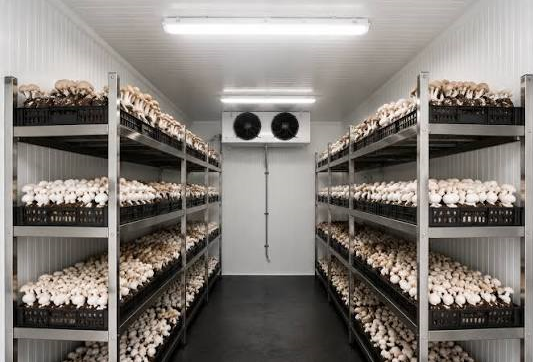
First of all, take the local ambient temperature into consideration. The outdoor temperature directly determines the refrigeration load. In hot southern regions, the heat dissipation pressure is high in summer, so the refrigeration unit should be properly oversized and the insulation configuration strengthened. Meanwhile, southern areas are humid. Vapor barrier and moisture-proof treatment must be done well to prevent moisture from penetrating the insulation layer, which would damage insulation performance and cause mildew inside the cold room. This is a common cause of failures for mushroom cold storage.
Secondly, plan the space reasonably. The storage volume is calculated according to daily harvest output and storage cycle. About 4 to 5 cubic meters of space is required per ton of fresh mushrooms, plus space for racks and air passages. If possible, set up a separate pre-cooling area. Rapid pre-cooling after harvest before long-term preservation can effectively reduce losses.
Insulation panel thickness matters a lot. The standard storage condition for fresh mushrooms is 0–4℃ with humidity of 85%–95%. 100mm polyurethane insulation panels are commonly used, while 120 mm panels are recommended for hot areas. Seals should be applied at panel joints and cold room doors, and heating wires on doors help de-ice to avoid cold leakage. Moisture-absorbing insulation materials are not suitable for this high-humidity environment.
Temperature and humidity control is the core. Mushrooms cannot bear direct strong cold wind. Low-speed air coolers together with humidification systems are required to avoid weight loss from dehydration or rot caused by condensed water. Temperature and humidity monitors and alarms are installed for real-time observation, and parameters can be adjusted for different mushroom varieties.
Finally, balance the initial investment and operating cost. The budget covers panels, refrigeration units, humidification systems, electric control and installation. Do not compare prices blindly. Check panel density, unit configuration and moisture-proof workmanship. High-quality units cost more at first, yet they are stable, power-saving and low-maintenance. Cheap configurations usually lead to higher electricity and repair costs later.
Matching local climate, proper space layout, reliable insulation and sealing, stable temperature & humidity control, together with balanced costs, will reduce mushroom waste and guarantee profits for growers.
For more details, please feel free to contact us direct: www.coolerfreezerunit.com , TEL/Whatsapp+86-13555735240, or Email: info01@coolerfreezerunit.com.
Post time: Nov-17-2026