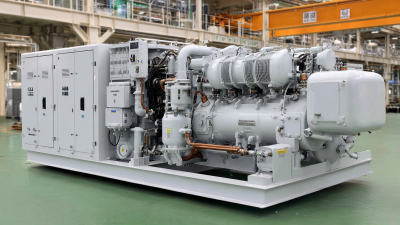
Picking the right refrigeration condenser can actually feel pretty overwhelming, right? With so many options out there, it's hard to know where to start. John Smith from CoolTech Industries puts it simply: "Getting the right condenser is key for keeping things running efficiently and making sure it lasts." Knowing what your cooling setup really needs makes all the difference. Using the wrong condenser could end up wasting a ton of energy and costing you more in the long run. After all, compressors and refrigerants work best when they're paired up with compatible parts. You've got your air-cooled and water-cooled options, each suited for different situations. So, taking a moment to understand your environment can really help you pick what's best. Don’t forget to look at the specific application, size, and efficiency of the condenser. Sometimes, businesses overlook these details, only to be hit with unexpected repair costs later on. It's a good idea to chat with professionals and explore different models before making a decision. Thinking carefully about your choices can really make a difference in how well everything performs. Bottom line? Focus on reliability and efficiency—trust me, it’ll pay off in the long run.
Refrigeration condensers play a crucial role in cooling systems. They are responsible for converting refrigerant gas into liquid by removing heat. This process is vital for maintaining desired temperatures in various applications, from refrigerators to industrial chillers.
Understanding the type of condenser you need can be challenging. Air-cooled condensers are commonly found in residential units. Water-cooled options are often used in larger facilities due to their efficiency. Each type has its advantages and challenges. For instance, air-cooled models require less maintenance but may struggle in high ambient temperatures. In contrast, water-cooled systems demand a steady water supply and can pose installation complexities.
When selecting a condenser, consider your specific needs. Think about space, efficiency, and environmental factors. You might overlook the impact of placement on system performance. Regular maintenance can also be a concern; issues that arise may not be easily visible. Reflect on these aspects to ensure your system operates efficiently. Understanding these nuances can lead to better decision-making and improved cooling solutions.
| Type of Condenser | Cooling Capacity (kW) | Energy Efficiency (COP) | Application | Estimated Cost ($) |
|---|---|---|---|---|
| Air-Cooled Condenser | 10 | 3.5 | Commercial Refrigeration | 1500 |
| Water-Cooled Condenser | 15 | 4.0 | Industrial Systems | 3000 |
| Evaporative Condenser | 20 | 4.5 | Large Scale Facilities | 5000 |
| Shell and Tube Condenser | 25 | 4.8 | Chemical Processing | 6000 |
When choosing a refrigeration condenser, understanding the differences between air-cooled and water-cooled options is crucial. Air-cooled condensers are commonly used in smaller systems. They rely on ambient air for cooling. According to industry reports, air-cooled systems can be up to 20% less efficient than water-cooled systems under certain conditions. Yet, they require less maintenance and no additional water source. This makes them suitable for many commercial applications.
On the other hand, water-cooled condensers tend to be more efficient, especially in larger systems. They can reduce energy consumption by 30-50% when compared to air-cooled designs. However, they need a continuous water supply, which might be challenging in arid regions. The initial setup costs for water-cooled systems can be higher, but their long-term efficiency may provide cost savings.
Selecting the right type depends largely on your specific needs. Assess your local environment, available resources, and energy costs. It’s essential to balance initial investment with long-term operational efficiency. This decision can directly impact your system’s performance and sustainability. So, take time to evaluate both options thoroughly.
Choosing the right refrigeration condenser is crucial for efficient cooling. Several factors play a significant role in making this decision. The condenser's capacity must match your cooling requirements. If it's too small, it will struggle to maintain the desired temperature. An oversized unit may waste energy and increase costs. Research shows that choosing the right size can improve energy efficiency by up to 20%.
Environmental conditions also matter. Ambient temperatures can affect condenser performance. For instance, high temperatures can reduce efficiency levels. Selecting a condenser rated for higher ambient temperatures can mitigate this issue. According to industry reports, systems designed with these factors in mind can last longer and perform better.
Tip: Always calculate the heat load of your space before selection. This calculation provides a clear benchmark for condenser capacity. Additionally, consider the type of refrigerant used. Some options are more environmentally friendly, while others may be more efficient. A balanced approach is essential to optimize performance.
When selecting a refrigeration condenser, understanding cooling load requirements is essential. The cooling load determines the amount of heat energy that must be removed from a space to maintain desired temperatures. Industry studies suggest that proper calculations can reduce energy consumption by up to 30%. This is crucial for both cost efficiency and environmental impact.
To calculate cooling loads, consider factors like room size, insulation quality, and equipment heat output. A typical approach uses the formula: Q = U × A × ΔT. Here, Q is the cooling load, U is the overall heat transfer coefficient, A is the area, and ΔT is the temperature difference. Neglecting to factor in these elements often leads to undersized systems that can’t cope effectively during peak demand. For instance, in commercial applications, an error in these calculations can lead to significant performance drops.
Additionally, it is vital to account for ambient conditions. External temperatures and humidity levels can vary greatly, impacting the condenser's efficiency. Reports indicate that improperly sized condensers can lead to reduced lifespan and increased maintenance costs. As such, knowledge and careful planning are key in ensuring the selected condenser meets your specific operational needs.
Choosing the right refrigeration condenser is crucial for optimal performance. One significant area to consider is energy efficiency ratings. These ratings indicate how well a unit converts energy into cooling. Higher ratings often mean lower operational costs, which is vital for businesses looking to reduce expenses.
Tips: Look for units with SEER (Seasonal Energy Efficiency Ratio) or EER (Energy Efficiency Ratio) ratings. A higher SEER indicates superior efficiency. Pay attention to the energy-saving features that some units offer. These can make a difference in overall energy consumption.
Energy efficiency is not just a number. It impacts your long-term costs. A less efficient condenser may seem cheaper upfront but can lead to higher utility bills over time. Assessing your actual needs versus potential savings can help narrow your choices.
Tips: Consider the size of your space and load requirements. A unit too small will work harder, causing extra wear. Engage with professionals who can analyze your needs and explain complex terms. Their insights can guide you in investing wisely.
When selecting a refrigeration condenser, installation and maintenance play vital roles in performance and longevity. Proper installation is key to ensure efficiency. Start by carefully reading the manufacturer’s guidelines. Ensure that the location is well-ventilated and free from obstructions. Using the correct mounting hardware can prevent vibrations that may lead to noise or damage. Over time, dirt and debris can accumulate on the condenser coils. Regular cleaning is essential; a simple wash can improve airflow dramatically.
Maintaining your condenser also involves checking the refrigerant levels. Low refrigerant can affect cooling performance. If this occurs, seek professional help rather than attempting a DIY fix. Another aspect to consider is the electrical connections. Loose or frayed wiring can pose safety risks. Regular inspections can help identify potential issues before they escalate. Keep the unit clear of vegetation and other objects to prevent overheating.
Reflecting on your routine, it's easy to overlook these maintenance tasks. Many people wait for a problem to arise instead of being proactive. This can lead to costly repairs and downtime. Establishing a maintenance schedule could save time and resources in the long run. Remember, a well-maintained condenser not only lasts longer but also operates more efficiently.
When selecting a refrigeration condenser, avoiding common mistakes is crucial. One frequent error is failing to assess the system's cooling load accurately. According to the American Society of Heating, Refrigerating and Air-Conditioning Engineers (ASHRAE), an incorrect load calculation can lead to inefficiencies and increased operational costs. This oversight may result in overloading the condenser, reducing its lifespan.
Another mistake involves neglecting the condenser type that best fits your specific application. A study from the International Institute of Refrigeration highlights that the choice between air-cooled and water-cooled condensers greatly impacts energy efficiency. For instance, air-cooled condensers are often less efficient in high ambient temperatures, leading to performance issues. Choosing the wrong type can cause poor system performance.
Additionally, some will overlook maintenance requirements. A report from the U.S. Department of Energy indicates that regular maintenance can improve system efficiency by up to 30%. Ignoring this factor may lead to unexpected breakdowns. These mistakes can hinder the performance of your cooling system. Awareness and deliberate planning are essential for making the right choice in refrigeration condensers.
In the realm of industrial refrigeration, evaporative condensers have emerged as pivotal components for enhancing cooling efficiency. These innovative devices leverage the natural process of evaporative cooling, significantly improving the overall thermal performance of cooling systems. The design of evaporative condensers emphasizes two primary flow types: countercurrent and mixed flow. In countercurrent systems, the air flows opposite to the spray water, maximizing heat transfer efficiency. Conversely, mixed-flow systems allow for a combination of air and water flows, catering to various operational needs.
The application of evaporative condensers is particularly notable in heavy industries where cooling loads are substantial. Their ability to reduce energy consumption while maintaining optimal cooling performance makes them an attractive choice for businesses looking to enhance efficiency and sustainability. By facilitating a seamless phase change of the working medium, these condensers play a crucial role in lowering operational costs and improving the resilience of refrigeration systems. As industries in China explore innovative solutions for efficient cooling, the adoption of evaporative condensers stands at the forefront, promising a significant advancement in thermal management technology.
: Consider the condenser's capacity, environmental conditions, refrigerant type, and energy efficiency ratings.
An undersized condenser struggles to cool, while an oversized one wastes energy and raises costs.
High ambient temperatures can reduce condenser efficiency, so choose one rated for higher temperatures.
Higher energy efficiency ratings indicate lower operational costs and better long-term savings.
Don't neglect accurate cooling load calculations or the type of condenser needed for your application.
Regular maintenance can improve efficiency by up to 30% and prevent unexpected breakdowns.
Consider both environmental impact and efficiency to optimize condenser performance.
Opt for units with higher SEER or EER ratings and look for energy-saving features.
Yes, professionals can help assess your needs and explain complex terms for better choices.
Miscalculating cooling load can lead to inefficiencies and increased operational costs over time.
Choosing the right refrigeration condenser is crucial for optimal cooling system performance. This article explores the role of refrigeration condensers and distinguishes between air-cooled and water-cooled types. It emphasizes key factors to consider when making a selection, such as cooling load requirements and energy efficiency ratings. Proper calculation of these aspects ensures that the condenser meets specific application needs while maximizing energy savings.
In addition to making an informed selection, the article provides valuable installation and maintenance tips for ensuring the longevity of refrigeration condensers. It also outlines common mistakes to avoid during the selection process. By understanding these principles, users can enhance system effectiveness and reduce operational costs, ultimately leading to a more efficient cooling solution.