Welcome to our websites!
0%

For global buyers, a chiller room isn’t just some mechanical space tucked behind a warehouse. It’s what helps protect product quality, keep operations steady, and cut down on temperature-related losses across international supply chains. And the pressure here is only growing. The International Energy Agency says global space-cooling electricity demand could more than triple—from roughly 2,000 TWh in 2016 to 6,200 TWh by 2050. That’s a pretty clear signal: cooling infrastructure has to perform reliably without quietly driving energy costs through the roof.

A well-designed chiller room gives you accurate temperature control, safe access to equipment, and continuous monitoring. In practice, that means properly sized chillers, insulated piping, drainage planning, ventilation, alarms, and backup plans. This stuff matters more than it might sound. The Food and Agriculture Organization reported that about 14% of food is lost between harvest and retail, and weak cold-chain conditions—especially during storage and transport transitions—play a part. So for buyers, the room’s design can affect shelf life, customer satisfaction, and, yes, commercial risk.

But here’s the catch: equipment capacity alone doesn’t prove reliability. A bigger system can use more power and still perform badly if airflow, maintenance, or commissioning gets ignored. Buyers should ask for test records, temperature-mapping results, energy data, and service procedures. ASHRAE guidance and ISO-based quality systems can help you evaluate things more professionally, but local conditions still matter. Humidity, ambient temperature, utility stability, and whether good technicians are actually available can all change the outcome. A chiller room matters—no doubt about it—but it isn’t automatically efficient. Careful verification is still essential.

Why Is a Chiller Room Important for Global Buyers?

What Is a Chiller Room?

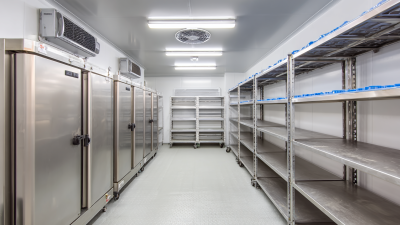
A chiller room is a dedicated technical space that houses equipment for producing and distributing chilled water. It is not the same as a cold room for storing food or medicines. Inside, buyers may find chillers, pumps, expansion tanks, control panels, valves, and connected pipework. The system removes heat from water or a water-glycol mixture, then sends the cooled fluid to air-conditioning units or industrial processes. The room itself may remain above freezing. That detail is often misunderstood.

For global buyers, the room’s design matters as much as the chiller’s cooling capacity. A practical layout should provide clear service paths, strong floor loading, drainage, ventilation, lighting, and safe electrical access. Heat from compressors must leave the room efficiently, especially in warm climates. Noise and vibration also need attention near offices or residential areas. During equipment inspections, technicians usually check pipe labels, insulation, leak protection, emergency access, and control-system compatibility. Small omissions become expensive later. A drawing can look complete, yet leave no space to remove a compressor. The term “chiller room” is not perfectly standardized across countries, so buyers should confirm room dimensions, operating temperatures, refrigerant requirements, local codes, and maintenance access in writing. Ask for operating data, not only a catalog capacity. Real performance may change with water temperature, ambient conditions, and partial load operation.

How Does a Chiller Room Maintain Product Quality?

A chiller room protects product quality by controlling temperature, humidity, airflow, and handling time. Fresh produce, dairy, seafood, and some medicines can deteriorate quickly outside their required range. A stable room temperature slows microbial growth and reduces moisture loss, softening, and discoloration.

Small details matter. Sensors should record temperatures continuously, while staff check door seals, evaporator coils, and airflow paths. A blocked air outlet can create warm pockets near stacked cartons. According to the World Health Organization’s Technical Report Series 961, temperature mapping is essential for identifying these hidden variations. A simple data logger can reveal problems that a wall display misses.

The financial impact is significant. The FAO’s State of Food and Agriculture 2019 reported that 14% of global food is lost between harvest and retail. Better cooling cannot prevent every loss, but it can protect more inventory during storage and export preparation. The UNEP Food Waste Index Report 2024 estimated that 1.05 billion tonnes of food were wasted in 2022. That figure should make buyers examine cold-chain weaknesses more carefully.

A chiller room is not a magic box. Overstocking, frequent door opening, poor pallet spacing, or delayed loading can still damage products. In practice, reliable quality comes from equipment, documented procedures, trained workers, and honest temperature records. Mistakes still happen. The valuable part is finding them early.

Which Industries Depend on Chiller Rooms?

Why Is a Chiller Room Important for Global Buyers?

Food processing and cold-chain logistics rely heavily on chiller rooms. Fresh meat, dairy, seafood, and prepared meals can deteriorate quickly without stable temperatures. A well-designed room protects product quality from production through shipment. It also helps buyers meet export requirements and reduce avoidable waste.

Pharmaceutical and biotechnology companies depend on precise cooling for temperature-sensitive medicines, samples, and raw materials. Hospitals use chilled storage for certain treatments and laboratory materials. Flower growers, hotels, restaurants, and supermarkets also need dependable rooms for short-term preservation. Even a few degrees of fluctuation can affect shelf life, safety, or clinical performance. Small errors matter.

Daily operation reveals details that specifications may overlook. Frequent door opening, warm pallets, wet floors, and blocked airflow can weaken cooling performance. Sensors, alarms, insulated panels, and backup power deserve careful attention. Maintenance records should be clear and easy to verify. A common mistake is focusing only on the refrigeration unit. The room layout matters just as much. No system is perfect. Buyers should review real loading habits, local climate, service access, and emergency procedures before choosing a solution.

What Equipment Is Used in a Chiller Room?

Why Is a Chiller Room Important for Global Buyers?

A chiller room is more than a space for cooling machines. It protects process stability, product quality, and energy performance. The main equipment is the water chiller, which removes heat from circulating water. Primary and secondary pumps move this water through pipes, heat exchangers, and production areas. Expansion tanks absorb pressure changes. Strainers and filters protect pumps from debris.

Air-cooled chillers use condenser fans and outdoor coils. Water-cooled systems usually need cooling towers, condenser pumps, and water treatment equipment. Control panels connect sensors, valves, flow meters, and alarms. These devices monitor temperature, pressure, flow, and electrical load. A poorly placed sensor can create false readings. That small detail can increase operating costs.

Tips: Check local voltage, ambient temperature, water quality, and maintenance access before purchasing. Leave enough space around compressors and electrical panels. Ask for tested performance data, wiring diagrams, spare-part lists, and commissioning records. Emergency ventilation and drainage also deserve attention. In field projects, buyers sometimes focus on cooling capacity and overlook service clearance. That mistake becomes expensive when filters need replacement or pumps require repair. Noise levels, backup power, corrosion protection, and seasonal performance should also enter the specification. Different climates may require different condenser designs. A standard configuration is not always the safest choice.

Why Is a Chiller Room Important for Global Buyers? - What Equipment Is Used in a Chiller Room?

Equipment or System Primary Function Typical Technical Data Why It Matters to Global Buyers Key Selection Criteria
Chiller Removes heat from chilled water or another cooling fluid for air-conditioning and process cooling. Common capacity range: approximately 20–2,000 kW. Typical chilled-water supply temperature: 5–7°C, depending on the application. The chiller is the main source of cooling capacity and strongly influences energy use, operating cost, and system reliability. Cooling capacity, seasonal efficiency, refrigerant type, ambient operating range, voltage, noise, service access, and applicable safety standards.
Chilled-Water Pump Circulates cooled water between the chiller, air-handling equipment, fan-coil units, and process loads. Pump selection is based on required flow rate and total dynamic head. Variable-speed drives are commonly used for load adjustment. Correct flow is essential for stable temperatures, efficient heat transfer, and protection against insufficient-flow alarms. Flow and head, pump efficiency, redundancy, seal design, control compatibility, pipe connection size, and local power supply.
Condenser-Water Pump Moves condenser water between a water-cooled chiller and the cooling tower. Used only in water-cooled systems. Required flow depends on chiller heat rejection and condenser-water temperature design. It affects condenser pressure, chiller efficiency, and the stability of the entire heat-rejection loop. Corrosion resistance, pump efficiency, water quality, redundancy, maintenance access, and compatibility with the tower and chiller.
Cooling Tower Rejects heat from condenser water to the outdoor air through evaporation. Installed with water-cooled chillers. Performance depends on entering-water temperature, leaving-water temperature, airflow, and outdoor wet-bulb temperature. It can reduce chiller energy consumption but requires water management, treatment, freeze protection, and regular cleaning. Climate, water availability, drift control, sound limits, plume requirements, corrosion protection, water treatment, and local environmental rules.
Expansion Tank Absorbs volume changes in the closed chilled-water circuit caused by temperature variation. Usually a diaphragm or bladder tank. Sizing depends on system volume, operating temperature range, and pressure limits. It helps maintain stable system pressure and reduces the risk of pressure-relief discharge or air entering the piping system. Tank volume, maximum working pressure, pre-charge setting, material, connection size, and pressure-vessel compliance.
Air Separator and Strainer Removes entrained air and captures debris that could reduce heat transfer or damage pumps and valves. Installed at locations selected for effective air removal and filtration. Strainer mesh size is selected according to equipment requirements. Clean water and air-free piping improve flow stability, reduce corrosion risk, and protect high-value components. Pressure drop, service clearance, body material, drain arrangement, automatic venting, and compatibility with water-treatment chemicals.
Buffer Tank Adds water volume to the chilled-water circuit to reduce short cycling and stabilize supply temperature. Required volume varies with chiller minimum-load capacity, control sequence, and system load profile. It is useful where loads change quickly or where the system has low water volume relative to chiller capacity. Required volume, insulation, allowable pressure, internal coating, footprint, transport limitations, and drain access.
Control Panel and BMS Interface Monitors temperatures, pressures, flow, alarms, operating status, and equipment sequencing. Common communication protocols include BACnet and Modbus. Sensors typically monitor supply and return temperatures, pressure, and flow. Remote monitoring and coordinated control help reduce downtime, simplify maintenance, and improve energy management across sites. Protocol compatibility, cybersecurity, language support, remote access, alarm history, spare parts, and local commissioning capability.
Valves, Flow Meters, and Pressure Instruments Regulate flow, isolate equipment, balance circuits, and provide operating data for control and troubleshooting. Typical components include isolation valves, control valves, check valves, balancing valves, pressure gauges, and flow meters. Proper measurement and isolation make commissioning safer and reduce service time when components require repair. Pressure and temperature rating, valve authority, accuracy, pipe size, actuator voltage, calibration, and replacement availability.
Water Treatment and Make-Up System Controls corrosion, scale, biological growth, and water loss in chilled-water or condenser-water circuits. Water quality requirements depend on system materials, open or closed-loop design, local water chemistry, and treatment method. Good water management protects heat exchangers, maintains efficiency, and extends the service life of pumps and piping. Local water conditions, chemical handling rules, blowdown control, filtration, monitoring, operator training, and environmental compliance.
Safety, Drainage, and Ventilation Provisions Provides safe access, emergency drainage, adequate ventilation, lighting, and protection against refrigerant or water-related hazards. Design requirements vary by refrigerant, room size, equipment type, local building code, and occupational safety regulations. A compliant room reduces operational risk and supports inspection, maintenance, insurance, and approval requirements in different markets. Emergency ventilation, refrigerant detection where required, floor drains, clearance, fire protection, access routes, noise control, and local code compliance.

Note: Technical ranges are general industry references. Final equipment sizing should be confirmed through a project-specific heat-load calculation, system design, site climate assessment, and applicable local regulations.

How Do Global Buyers Evaluate Chiller Room Performance?

Global buyers evaluate chiller room performance through measurable conditions, not attractive equipment photos. Temperature stability is usually the first checkpoint. A reliable room should maintain the required range during loading, door openings, and outdoor heat. Short fluctuations may expose weak capacity planning. Buyers often request logged data from sensors, not handwritten records. They also inspect sensor placement near doors, corners, and product storage levels.

Energy use matters because a cold room can consume power continuously. Buyers compare daily consumption with room volume, operating temperature, and occupancy. Poor insulation, damaged door seals, or blocked evaporators can increase costs quickly. Airflow should remain even across shelves and pallets. Hot spots are a serious warning. Some buyers use independent temperature mapping before signing a long-term agreement. This adds time, but it can reveal problems that normal gauges miss.

Maintenance evidence strongly affects trust. Buyers examine cleaning schedules, calibration certificates, alarm tests, and repair response times. They may ask how the room performs during power interruptions. Backup systems and clear emergency procedures reduce product risk. However, redundancy does not guarantee perfect protection. It can fail when staff are not trained or alarms are ignored. I have seen evaluations focus heavily on machinery while overlooking door discipline and loading habits. That approach needs reconsideration. Performance depends on the whole operating process, not only the chiller unit. Reliable suppliers provide transparent records, realistic capacity calculations, and access for independent inspections.

What Standards Govern Chiller Room Design and Operation?

Why Is a Chiller Room Important for Global Buyers?

Chiller room design is governed by safety, ventilation, energy, and refrigerant-control standards. ASHRAE Standard 15 addresses refrigerant concentration limits, machinery-room ventilation, leak detection, and emergency access. ISO 5149 and EN 378 provide similar international guidance. Local building and fire codes still take priority, which can complicate projects across countries. Buyers should request a compliance matrix before equipment selection.

Energy performance matters too. ASHRAE Standard 90.1 sets efficiency requirements for chillers, pumps, controls, and heat rejection systems. Standard 62.1 guides indoor air quality and ventilation. The International Energy Agency reported in The Future of Cooling that space cooling demand has tripled since 1990. Cooling could consume more than 10% of global electricity by 2050 without stronger efficiency measures. That figure makes part-load performance important, not just rated capacity. A chiller operating beside a warm exhaust path may waste energy every hour.

Daily operation must reflect these standards. Operators should record supply-water temperature, pressure, refrigerant alarms, vibration, and pump status. Clear service access reduces unsafe improvisation. Drainage matters. Small leaks can damage insulation, floors, and electrical equipment before anyone notices. Commissioning should test alarms and emergency ventilation under realistic conditions, not only during paperwork reviews.

No checklist is perfect. Poor maintenance can defeat excellent design. A practical buyer should also verify training records, spare-part access, inspection intervals, and climate-specific performance data.

100mm Cold Room Panels: Key Benefits, Applications, Features, and Selection Guide

100mm Cold Room Panels: Key Benefits, Applications, Features, and Selection Guide

A 100mm cold room panel is an insulated PUF panel designed to help maintain stable internal temperatures in refrigerated and temperature-controlled environments. Its polyurethane foam core provides effective thermal insulation, while the modular construction allows wall and ceiling panels to be assembled efficiently according to the room layout. The woodless structure avoids timber components, helping reduce moisture absorption, material deterioration, and potential hygiene concerns in demanding cold storage conditions.

These panels are suitable for food processing areas, chilled and frozen storage rooms, pharmaceutical facilities, laboratories, supermarkets, restaurants, and distribution centers. Their smooth, cleanable surfaces support practical sanitation requirements, while the panelized design can simplify installation, modification, and future expansion. A 100mm thickness is commonly selected when stronger insulation performance is required for chilled or frozen applications, helping reduce heat transfer and support more consistent operating conditions.

When selecting a 100mm cold room panel, consider the target temperature range, room dimensions, joint tightness, surface material, fire performance, and expected cleaning procedures. The panel connection system should provide secure alignment and minimize air leakage at wall, ceiling, floor, and door interfaces. It is also important to evaluate the installation environment, humidity level, loading requirements, refrigeration capacity, and access frequency to ensure the panel specification matches the intended application.

FAQS

What is a chiller room?

A chiller room houses equipment that produces and distributes chilled water. It may contain chillers, pumps, valves, tanks, controls, and pipework. The room can remain above freezing. It is not a food storage room.

How does a chiller room support product quality?

It helps control temperature, humidity, airflow, and handling time. Stable cooling can slow spoilage, moisture loss, softening, and discoloration. It cannot protect products from every mistake. It is not magic.

What equipment should buyers expect inside?

Buyers may find cooling units, circulation pumps, expansion tanks, control panels, valves, and insulated pipes. Leak protection and drainage are also important. Small gaps matter. The equipment list may vary by project.

What room features are essential?

The layout should provide clear service paths, strong floor loading, drainage, lighting, and safe electrical access. Ventilation must remove compressor heat efficiently. Leave enough space to remove large components. A drawing can still miss this.

How can operators find hidden temperature problems?

Continuous sensors and simple data loggers can record changing temperatures. Temperature mapping may reveal warm pockets near stacked cartons. Blocked outlets and poor pallet spacing create uneven cooling. Wall displays alone may mislead operators.

Which operating records should be maintained?

Operators should record water temperature, pressure, alarms, vibration, and pump status. Temperature records should be honest and continuous. Door openings and loading delays deserve attention too. Records are useful only when someone reviews them.

What safety and compliance points should global buyers check?

Buyers should verify ventilation, refrigerant limits, leak detection, emergency access, electrical safety, and local building requirements. Local rules may differ between countries. Request a written compliance matrix. Do not rely only on a catalog.

How can buyers judge real energy performance?

Ask for performance data at different water temperatures, outdoor conditions, and partial loads. Rated capacity may not match daily operation. A warm exhaust path can waste energy continuously. Efficiency claims need practical evidence.

What mistakes commonly damage a chiller room?

Overstocking, frequent door opening, weak insulation, poor airflow, and delayed loading can reduce performance. Small leaks may damage floors and electrical equipment. Training and maintenance remain necessary. Excellent design can still fail.

Conclusion

A Chiller Room is a controlled-temperature space designed to keep perishable goods, ingredients, medicines, and other temperature-sensitive products within a stable and safe range. By combining insulation, refrigeration, air circulation, humidity management, monitoring systems, and reliable door controls, it helps reduce spoilage, preserve freshness, maintain product quality, and support consistent storage conditions. Industries such as food processing, hospitality, agriculture, healthcare, pharmaceuticals, and international logistics commonly depend on chiller rooms.

For global buyers, evaluating a Chiller Room involves reviewing cooling capacity, temperature uniformity, energy efficiency, equipment reliability, sanitation, maintenance access, alarm functions, and data-recording capabilities. Key equipment may include refrigeration units, evaporators, condensers, sensors, control panels, shelving, lighting, and backup systems. Buyers should also confirm that the design and operation follow applicable food safety, electrical, building, workplace safety, and environmental requirements in the intended market. A well-designed chiller room improves operational stability, reduces product loss, and supports dependable supply-chain performance.

Sophie

Sophie

Sophie is a dedicated marketing professional specializing in cold storage solutions, with a keen expertise in planning, design, and equipment provision. With a strong grasp of the industry, she ensures that customers from diverse sectors receive personalized, one-to-one service tailored to their......
Previous China Top 10 Cold Storage Facility Manufacturers?